
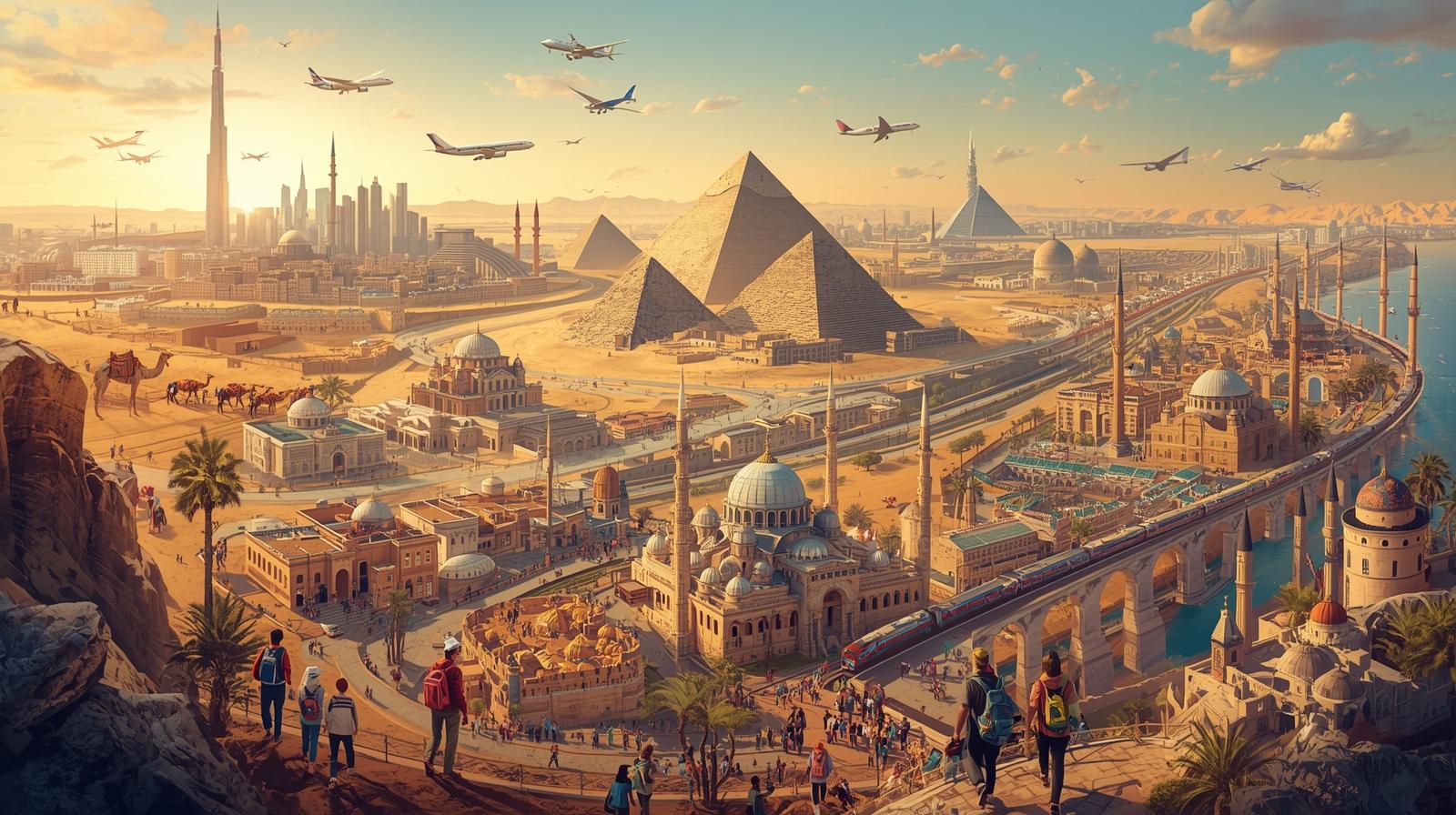
The Middle East is a region that connects continents through land routes, sea passages, and air corridors. It plays a role in global travel, trade, religion, and migration. People travel to the Middle East for tourism, work, pilgrimage, education, and family visits. The region supports travel through airports, ports, highways, and cross border systems.
This Middle East travel guide explains destinations, countries, tourism systems, transport networks, accommodation, food, safety, and travel planning. The purpose is to help travelers understand how travel works in the Middle East and how to plan trips with clarity.
Geography of the Middle East
The Middle East is located at the intersection of Asia, Africa, and Europe. It includes deserts, plains, river valleys, coastal areas, and mountain zones. The region borders major seas and waterways that support shipping and travel.
Key geographic features influence travel routes and settlement patterns. Airports and cities often develop near trade routes and water access points.
Countries in the Middle East
The Middle East includes several countries, each with its own visa rules, travel policies, and tourism systems.
Commonly included countries are:
- Saudi Arabia
- United Arab Emirates
- Qatar
- Kuwait
- Oman
- Bahrain
- Jordan
- Israel
- Palestine
- Iraq
- Iran
- Turkey
- Yemen
Each country manages tourism through national regulations and entry systems.
Tourism in the Middle East
Tourism in the Middle East supports economic activity and cultural exchange. Governments invest in transport, hospitality, and digital services to manage visitor flow.
Religious Tourism
The Middle East hosts religious sites linked to Islam, Christianity, and Judaism. Pilgrims travel according to fixed calendars and routes. Religious tourism follows strict rules related to conduct and access.
Cultural Tourism
Cultural tourism includes visits to museums, historical zones, markets, and community spaces. Visitors learn about social structures, traditions, and public life.
City Tourism
Cities act as travel hubs. Visitors explore transport systems, shopping areas, food centers, and public spaces. City tourism supports short stays and transit travel.
Business and Transit Tourism
Many travelers pass through the Middle East for business meetings or flight connections. Airports serve as global transit points.
Travel Planning for the Middle East
Travel planning is important due to different rules across countries.
Visa and Entry Systems
Visa systems vary and include:
- Visa free access
- Visa on arrival
- Electronic visa
- Embassy issued visa
Travelers must confirm requirements before booking flights.
Travel Timing
Travel demand changes during religious periods, public holidays, and events. Prices and availability follow these cycles.
Documentation
Travelers carry passports, visas, hotel confirmations, and return tickets. Some countries require proof of funds or insurance.
Transport Systems in the Middle East
The Middle East supports modern transport networks that connect cities and borders.
Air Travel
Major international airports operate in:
- Dubai
- Doha
- Riyadh
- Jeddah
- Abu Dhabi
- Istanbul
Air travel connects the region with Europe, Asia, Africa, and the Americas.
Road Transport
Highways connect cities and neighboring countries. Buses and private cars support regional travel. Border crossings operate under country agreements.
Rail Transport
Rail systems operate in selected countries and continue to expand. Rail travel supports city and industrial connections.
Sea Transport
Ports support ferry travel and cruise routes. Coastal cities use sea transport for tourism and trade.
Accommodation in the Middle East
Accommodation options vary by country and city.
Common types include:
- Hotels
- Guesthouses
- Serviced apartments
- Resorts
- Short stay rentals
Booking platforms support online reservations. Travelers review location, rules, and access before booking.
Food and Dining in the Middle East
Food is part of travel experience. Meals are shared in homes, restaurants, and public spaces. Travelers find food through:
- Restaurants
- Cafes
- Street food areas
- Markets
Dietary rules and cultural norms influence food availability. Travelers respect local customs.
Currency and Payments
The Middle East uses multiple currencies. Some countries support cash use while others rely on cards and digital payments.
Payment methods include:
- Cash
- Debit cards
- Credit cards
- Mobile payment apps
Exchange services are available at airports and banks.
Language and Communication
Arabic is widely spoken across the region. Other languages are used in business and tourism. English is common in travel areas.
Translation apps help communication. Learning basic phrases supports interaction.
Safety and Travel Awareness
Safety depends on planning and awareness.
Travelers should:
- Follow local laws
- Respect customs
- Monitor official travel updates
- Keep emergency contacts
Security checks are common at airports and public places.
Health and Medical Services
Healthcare systems vary by country. Travelers check medical access and insurance coverage.
Important steps include:
- Carrying prescriptions
- Reviewing vaccination guidance
- Purchasing travel insurance
Hospitals operate through public and private systems.
Cultural Norms and Travel Behavior
Cultural norms influence dress, behavior, and social interaction. Travelers follow local expectations related to:
- Clothing
- Public conduct
- Photography
- Religious spaces
Respect supports smooth travel experiences.
Shopping and Markets
Markets and shopping centers operate in cities and towns. Travelers purchase goods, food items, and local products.
Shopping areas include:
- Traditional markets
- Shopping malls
- Commercial streets
Price negotiation exists in some markets.
Technology and Digital Travel Tools
Digital tools support travel planning and daily movement.
Common tools include:
- Online booking platforms
- Map applications
- Ride booking apps
- Translation services
Internet access is available in most urban areas.
Education and Student Travel
Students travel to the Middle East for:
- University programs
- Language studies
- Exchange programs
Student visas and campus housing support education travel.
Business and Work Travel
The Middle East hosts trade centers, energy sectors, and logistics hubs. Business travelers use city centers and transport networks.
Work visas vary by country and job type.
Events and Festivals
Events influence travel schedules. Religious events and national programs affect transport and accommodation demand.
Travelers plan bookings around event calendars.
Family Travel in the Middle East
Families travel for holidays, visits, and education. Planning includes:
- Accommodation suitability
- Transport access
- Family services
Many hotels support family stays.
Solo Travel in the Middle East
Solo travelers use public transport and short stay accommodation. Planning and awareness support solo travel.
Travel Costs in the Middle East
Travel costs differ by country and city. Budget planning includes:
- Flights
- Accommodation
- Transport
- Food
- Entry fees
Travelers compare destinations based on spending needs.
Border Crossings and Regional Travel
Land borders operate in selected areas. Travelers check crossing rules, permits, and operating hours.
Regional travel requires document checks and coordination.
Travel Itineraries in the Middle East
Travelers plan routes based on time and purpose:
- Single country visits
- Multi country routes
- City based travel
Air travel supports fast movement between countries.
Long Stay and Remote Work Travel
Some countries offer long stay visas. Remote workers use internet services and shared workspaces.
Visa conditions apply to work activities.
Tourism Policy and Regulation
Tourism is managed through national policies. Regulations cover:
- Visitor entry
- Accommodation rules
- Public conduct
Travelers follow country laws and guidelines.
Environmental and Responsible Tourism
Tourism affects local resources. Responsible travel focuses on:
- Water use
- Waste management
- Community respect
Visitors support sustainable practices by following local rules.
Future of Tourism in the Middle East
Tourism systems continue to develop through infrastructure projects and digital platforms. Countries focus on travel access, safety systems, and visitor services.
Conclusion
The Middle East is a region shaped by movement, belief systems, trade, and travel routes. Travelers visit for tourism, pilgrimage, business, education, and transit. Planning, awareness, and respect support positive travel experiences.
This Middle East travel guide provides structured information to help travelers understand travel systems, plan routes, and meet entry requirements across the region.