
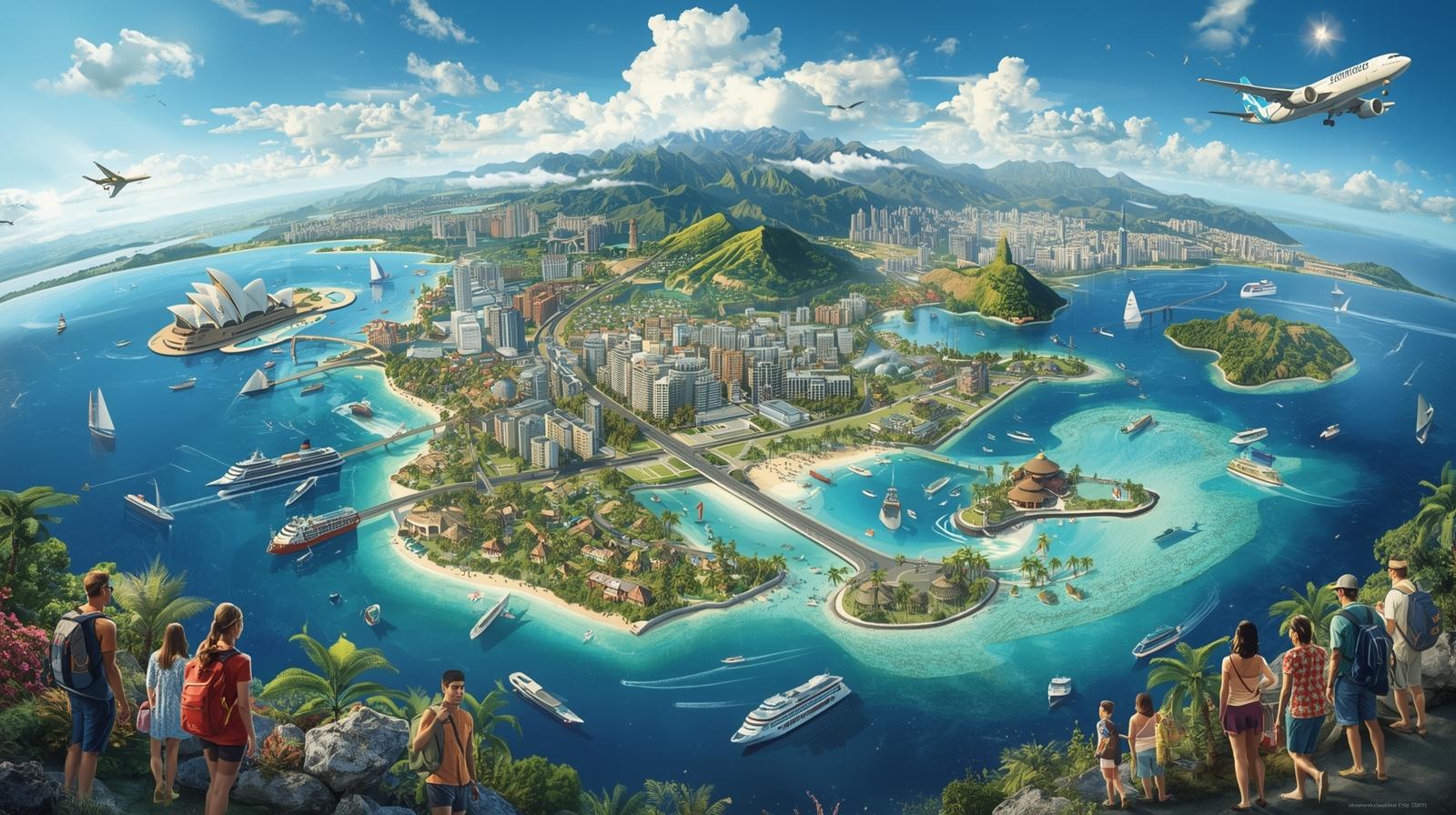
Oceania is a region made up of islands and countries spread across the Pacific Ocean. It includes nations with shared ocean routes, air connections, and cultural links. People travel to Oceania for tourism, education, work, migration, and family visits. The region depends on air travel, sea transport, and digital systems to support movement between islands and continents.
This Oceania travel guide explains geography, countries, tourism types, travel planning, transport systems, accommodation, food, safety, and visitor needs. The aim is to provide clear information for travelers planning travel across Oceania.
Geography of Oceania
Oceania covers a wide ocean area and includes thousands of islands. Land is divided into regions that follow historical and cultural groupings. Distance plays a major role in travel planning.
The region is commonly divided into:
- Australia
- New Zealand
- Melanesia
- Micronesia
- Polynesia
Oceania is surrounded by the Pacific Ocean and relies on ports and airports for access.
Countries and Territories in Oceania
Oceania includes independent countries and territories governed by other nations. Each follows its own entry rules and travel systems.
Australia and New Zealand
- Australia
- New Zealand
These countries act as travel hubs for the region and support long distance air routes.
Melanesia
- Papua New Guinea
- Fiji
- Solomon Islands
- Vanuatu
Travel includes island hopping and regional flights.
Micronesia
- Federated States of Micronesia
- Palau
- Marshall Islands
- Kiribati
- Nauru
These countries rely on limited air and sea routes.
Polynesia
- Samoa
- Tonga
- Tuvalu
- Cook Islands
- Niue
Travel follows fixed flight schedules and sea routes.
Tourism in Oceania
Tourism supports economies across Oceania. Governments manage tourism through visa systems, airport development, and community programs.
Island Tourism
Island travel includes coastal visits, marine activities, and local community stays. Transport planning is essential due to limited connections.
Cultural Tourism
Cultural tourism focuses on local traditions, ceremonies, language, and community life. Visitors engage through guided programs and local events.
Nature and Wildlife Tourism
Protected areas, marine zones, and land reserves support tourism under conservation rules.
City Tourism
Cities such as Sydney, Auckland, and Wellington act as entry points and transit centers.
Travel Planning for Oceania
Travel planning is important due to distance, cost, and limited transport options.
Visa and Entry Rules
Visa systems vary by country and include:
- Visa free entry
- Electronic visa
- Visitor visa
- Work and study visa
Travelers confirm requirements before booking flights.
Travel Timing
Travel schedules depend on weather patterns, flight availability, and local events. Advance booking is common.
Documentation
Travelers carry passports, visas, onward tickets, and accommodation details.
Transport Systems in Oceania
Transport relies on air and sea routes.
Air Travel
Air travel is the main transport method. International airports operate in Australia, New Zealand, and selected island countries. Regional flights connect islands.
Sea Transport
Ferries and boats support island travel. Sea travel depends on schedules and weather conditions.
Road Transport
Road networks operate within countries and islands. Car rentals and buses support local travel.
Accommodation in Oceania
Accommodation options vary by destination.
Common types include:
- Hotels
- Guesthouses
- Lodges
- Resorts
- Homestays
Availability may be limited in smaller islands. Early booking is advised.
Food and Dining in Oceania
Food systems are shaped by local resources and imports. Travelers access food through:
- Restaurants
- Cafes
- Local markets
- Community meals
Dietary needs should be communicated in advance in remote areas.
Currency and Payments
Oceania uses multiple currencies. Some islands rely on cash while others support cards.
Payment methods include:
- Cash
- Debit cards
- Credit cards
Banking access may be limited outside main towns.
Language and Communication
English is used in many parts of Oceania. Local languages are spoken within communities. Translation tools assist communication.
Learning basic local words supports respectful interaction.
Safety and Travel Awareness
Safety depends on preparation and local knowledge.
Travelers should:
- Follow local guidance
- Monitor weather updates
- Respect community rules
- Keep emergency contacts
Medical facilities vary by location.
Health and Medical Services
Healthcare access differs across countries and islands.
Travelers should:
- Carry travel insurance
- Bring required medication
- Review vaccination guidance
Medical evacuation may be required in remote areas.
Cultural Norms and Community Respect
Community customs guide behavior. Travelers follow local practices related to:
- Dress
- Photography
- Community access
- Religious sites
Respect supports positive engagement.
Shopping and Local Markets
Markets sell food, crafts, and daily goods. Visitors support local economies through market purchases.
Availability of goods may vary due to transport schedules.
Technology and Digital Access
Internet access varies by location. Cities and towns support mobile networks. Remote islands may have limited connectivity.
Digital tools assist with:
- Booking
- Navigation
- Communication
Education and Student Travel
Students travel to Oceania for education programs and exchange opportunities. Australia and New Zealand host universities and training centers.
Student visas and housing systems support education travel.
Business and Work Travel
Business travel includes sectors such as trade, agriculture, tourism, and education. Work visas differ by country and job type.
Remote work is subject to visa rules.
Events and Community Activities
Events influence travel schedules. These include cultural programs, sports events, and national celebrations.
Travelers plan accommodation and transport around event dates.
Family Travel in Oceania
Families travel for holidays and visits. Planning includes:
- Accommodation suitability
- Transport access
- Health services
Some destinations offer family focused services.
Solo Travel in Oceania
Solo travel requires planning due to distance and limited transport. Public transport and guided tours support solo travelers.
Travel Costs in Oceania
Costs depend on distance and supply access.
Budget planning includes:
- Flights
- Accommodation
- Food
- Transport
- Activities
Travelers compare destinations based on total travel cost.
Border Crossings and Island Transfers
Border entry occurs through airports and ports. Island transfers follow fixed schedules. Travelers check transfer times and luggage rules.
Travel Itineraries in Oceania
Travelers plan routes based on time and interest:
- Single country travel
- Multi island travel
- Regional routes
Flight planning is central to itinerary design.
Long Stay and Remote Living
Some countries offer long stay visas. Remote living requires planning for supplies, internet access, and healthcare.
Visa conditions apply to employment activities.
Tourism Policy and Regional Cooperation
Tourism is managed through national policies and regional cooperation. These systems focus on:
- Visitor management
- Environmental care
- Community involvement
Travelers follow local laws and guidelines.
Environmental Responsibility in Oceania
Island environments require care. Responsible travel includes:
- Waste reduction
- Water use awareness
- Respect for marine zones
Visitors support sustainability by following local rules.
Future of Tourism in Oceania
Tourism systems continue to develop through transport projects and digital services. Governments focus on access, safety, and community benefit.
Conclusion
Oceania is a region defined by ocean routes, island systems, and cultural networks. Travelers visit for tourism, education, work, and family reasons. Careful planning supports smooth travel across distances and borders.
This Oceania travel guide provides structured information to help travelers plan routes, meet entry requirements, and understand travel systems across the region.