
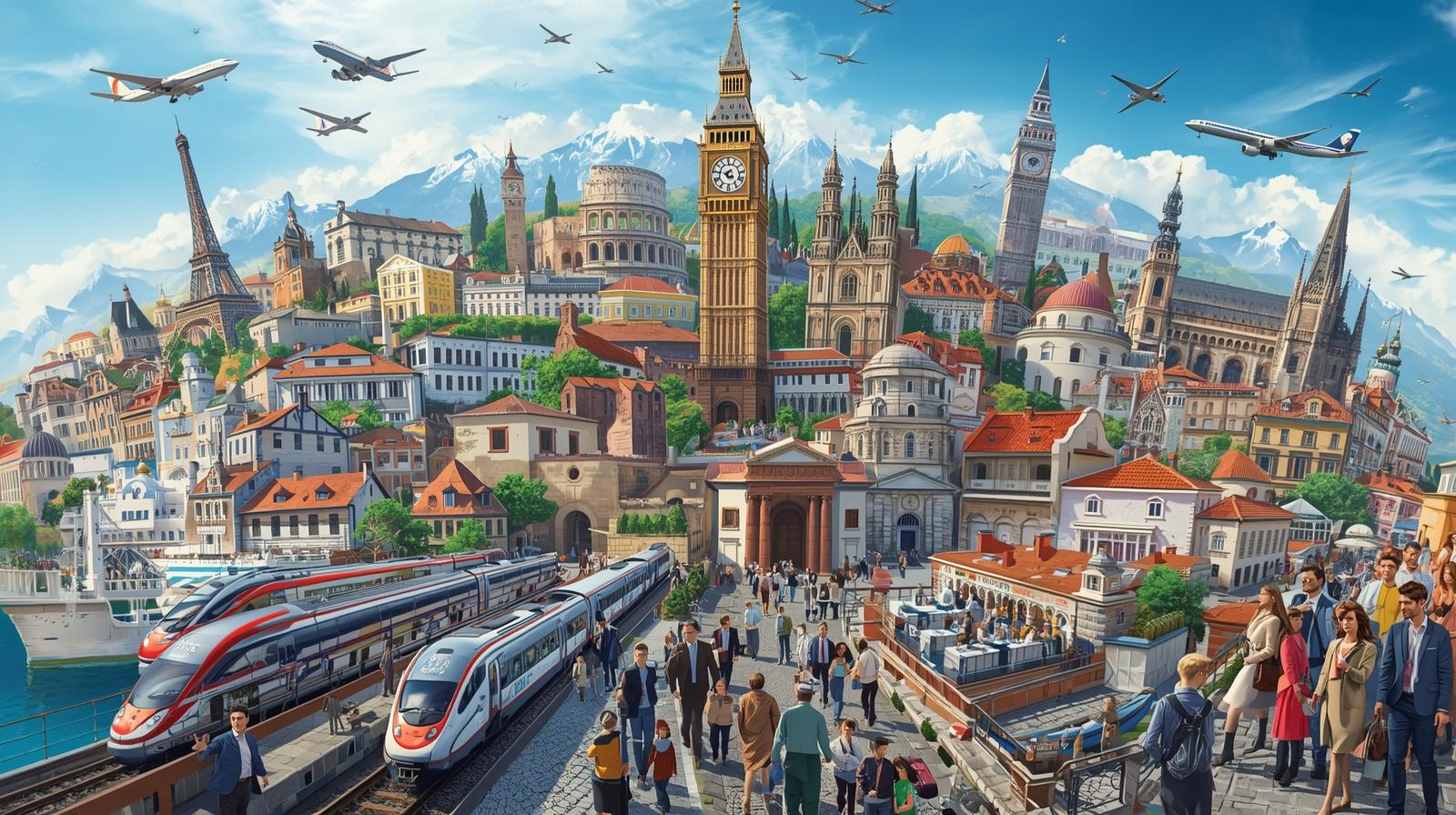
Europe is a continent that connects countries through land routes, sea routes, and air networks. It plays a central role in global travel, trade, education, and tourism. People travel to Europe for leisure, work, study, family visits, and events. The continent supports movement through shared systems, regional agreements, and transport links.
This Europe travel guide explains destinations, tourism systems, travel planning, transport, accommodation, food, safety, and visitor needs. The goal is to provide clear information for travelers who want structure and planning support.
Geography of Europe
Europe stretches from the Atlantic region to Eastern land borders and from northern polar areas to southern coastal zones. It connects with Asia through land boundaries and water passages. Rivers, plains, islands, and mountain zones shape travel routes and settlement patterns.
Europe includes mainland areas and island regions. Sea access supports ferry travel and port cities. Land borders allow road and rail movement between many countries.
Countries in Europe
Europe includes more than forty countries. Each country follows its own entry rules, currency systems, and travel regulations. Some countries participate in shared visa and border systems.
Western Europe
- France
- Germany
- Belgium
- Netherlands
- Austria
- Switzerland
Travelers visit these countries for city stays, business travel, and regional transport connections.
Southern Europe
- Italy
- Spain
- Portugal
- Greece
- Croatia
- Malta
Southern Europe supports coastal travel, island routes, and seasonal tourism flows.
Northern Europe
- United Kingdom
- Ireland
- Sweden
- Norway
- Denmark
- Finland
This region supports city travel, ferry networks, and rail systems.
Eastern Europe
- Poland
- Hungary
- Czech Republic
- Romania
- Bulgaria
- Slovakia
Eastern Europe connects land routes between western and eastern regions.
Baltic Region
- Estonia
- Latvia
- Lithuania
These countries support port travel, road networks, and regional trade routes.
Tourism in Europe
Tourism in Europe operates through public and private systems. Governments support tourism through infrastructure, visa agreements, and promotion programs.
City Tourism
Cities serve as travel centers. Visitors explore streets, public buildings, transport systems, and marketplaces. City tourism supports walking routes and public transport use.
Cultural Tourism
Visitors travel to sites linked with history, art, religion, and public memory. Cultural tourism includes museums, churches, public squares, and archives.
Religious Tourism
Europe hosts religious routes and pilgrimage sites linked to Christianity and other belief systems. Travel follows fixed calendars and event periods.
Nature and Rural Tourism
Rural regions support walking routes, farming stays, and local travel programs. Nature travel follows regional conservation rules.
Travel Planning for Europe
Travel planning helps visitors manage entry rules, routes, budgets, and time.
Visa and Entry Rules
Many European countries operate under shared visa systems. Travelers may need:
- Short stay visa
- Long stay visa
- Student visa
- Work visa
Entry rules depend on nationality and travel purpose.
Border Movement
Some borders allow free movement. Others require passport checks. Travelers should confirm border policies before travel.
Travel Seasons
Travel demand changes during holidays, events, and school breaks. Prices and availability follow these patterns.
Transport Systems in Europe
Europe supports connected transport systems that allow travel across countries.
Air Transport
International airports operate in many cities. Air travel supports long distance and intercontinental movement.
Rail Transport
Rail networks connect cities and countries. Cross border trains operate under shared agreements. Rail passes support multi country travel.
Road Transport
Highways and roads allow car and bus travel. Road travel supports regional access and rural visits.
Sea Transport
Ferries connect islands and coastal cities. Sea routes support passenger and vehicle transport.
Accommodation in Europe
Europe offers multiple accommodation types:
- Hotels
- Hostels
- Guesthouses
- Apartments
- Homestays
Booking platforms allow online comparison. Travelers consider location, transport access, and rules.
Food and Dining in Europe
Food systems reflect regional agriculture and trade routes. Travelers access food through:
- Restaurants
- Cafes
- Markets
- Home dining
Food safety rules apply across countries. Dietary needs are supported in many cities.
Currency and Payments
Europe uses multiple currencies. Some countries share a common currency while others use national systems. Payment methods include:
- Cash
- Cards
- Mobile payments
Exchange services operate at airports, banks, and city centers.
Language and Communication
Many languages are spoken across Europe. English is used in travel areas. Translation tools support communication. Learning basic phrases improves interaction.
Safety and Travel Awareness
Travel safety depends on preparation and awareness.
Travelers should:
- Carry identification
- Follow local laws
- Monitor travel updates
- Keep emergency contacts
Health services vary by country. Insurance supports medical access.
Health and Medical Travel
Healthcare systems operate through public and private providers. Travelers should:
- Check health coverage
- Carry prescriptions
- Review vaccination guidance
Emergency services operate through national systems.
Education and Student Travel
Europe hosts universities and exchange programs. Students travel for:
- Degree programs
- Exchange semesters
- Language courses
Student visas and housing systems support education travel.
Business and Work Travel
Europe supports trade, finance, and industry. Business travelers use city centers and transport hubs. Work visas depend on job type and duration.
Events and Travel Flow
Events influence travel demand. These include:
- Conferences
- Sports events
- Cultural programs
Travelers plan accommodation and transport around event schedules.
Shopping and Local Markets
Markets and shopping streets operate in cities and towns. Travelers buy food items, clothing, and crafts. Tax refund systems exist for visitors in some countries.
Technology and Digital Travel Tools
Digital services support travel planning and movement.
Common tools include:
- Online booking platforms
- Digital maps
- Transport apps
- Translation tools
Internet access is available in most urban areas.
Sustainable Tourism in Europe
Tourism impacts local systems. Sustainable tourism focuses on:
- Environmental care
- Community support
- Resource management
Travelers follow local rules and support responsible services.
Family Travel in Europe
Families travel for holidays, education, and visits. Family planning includes:
- Accommodation selection
- Transport access
- Child friendly services
Many destinations support family travel needs.
Solo Travel in Europe
Solo travelers use public transport and shared accommodation. Safety planning and route research support solo travel.
Travel Costs in Europe
Costs vary by country and city. Budget planning includes:
- Transport
- Accommodation
- Food
- Entry fees
Travelers compare destinations based on spending structure.
Border Crossings and Documentation
Travelers carry passports, visas, and insurance documents. Border checks vary by region. Digital records support entry processes.
Travel Itineraries in Europe
Travelers design itineraries based on time and interest:
- Single country routes
- Multi country routes
- Regional circuits
Rail and road systems support itinerary planning.
Long Stay and Remote Work Travel
Some countries offer long stay permits. Remote workers use internet services and shared workspaces. Visa rules apply.
Tourism Policy and Regulation
Tourism operates under national and regional policies. These policies manage:
- Visitor numbers
- Safety rules
- Transport systems
Travelers follow local regulations.
Future of Travel in Europe
Travel systems continue to change through technology and policy updates. Focus areas include transport efficiency, digital services, and sustainability planning.
Conclusion
Europe supports global travel through connected systems, shared routes, and varied destinations. Travelers visit for tourism, education, business, and family reasons. Clear planning and awareness support smooth travel experiences.
This Europe travel guide provides structured information to help travelers plan routes, manage requirements, and understand regional travel systems.